
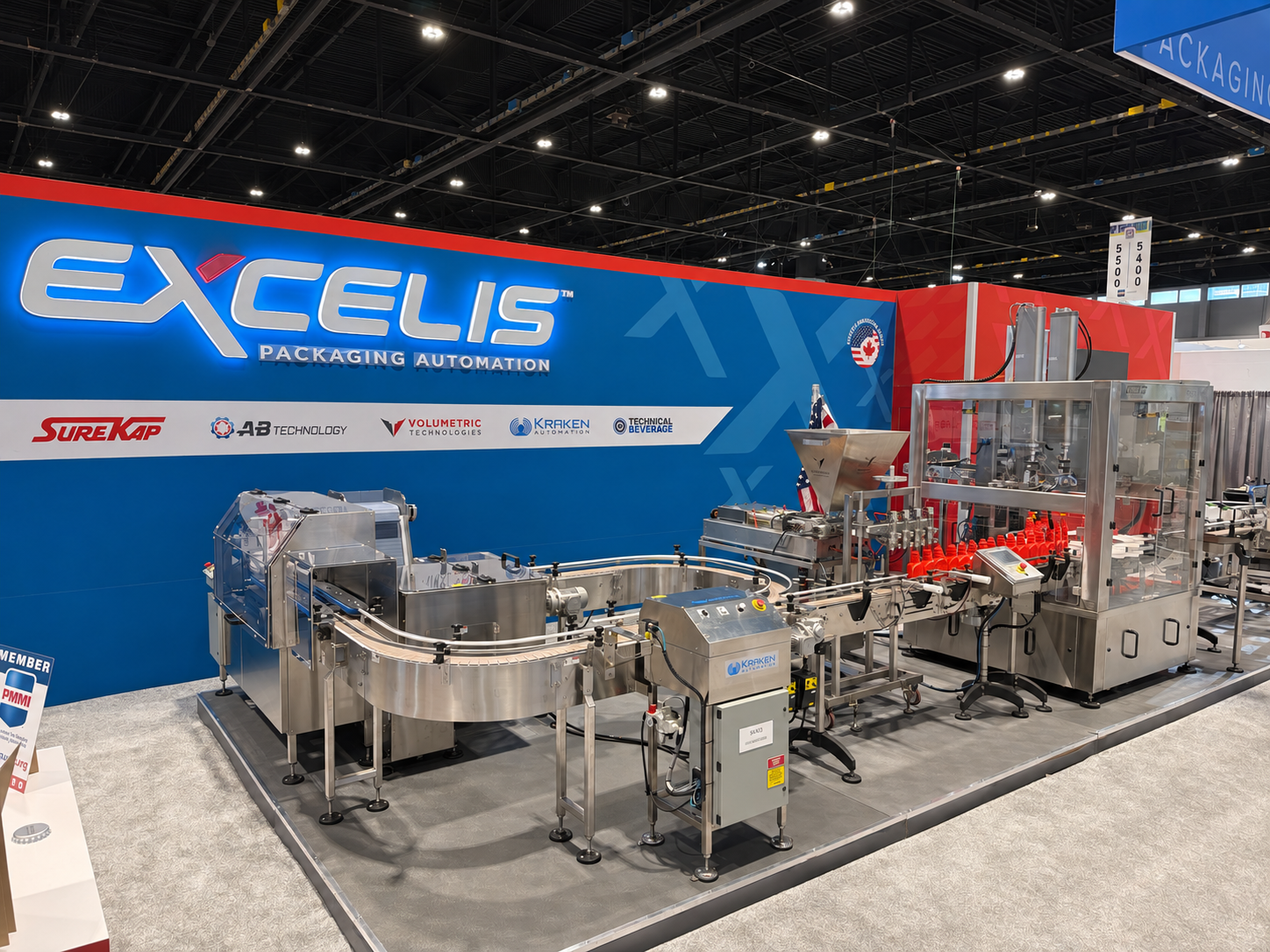
Fall is a natural time to look ahead. As manufacturers plan for year-end production and prepare for the coming year, it’s also a good opportunity to evaluate where a packaging line may be slowing things down. A better automated line does not always mean replacing everything. Often, the biggest improvements come from identifying the right areas to automate, integrate, or upgrade.
Find the Bottlenecks
Every line has a limiting point. It may be filling, depositing, capping, labeling, product handling, or simply a manual process that can no longer keep pace with production.
Start by looking at where operators are spending the most time, where products tend to back up, and where inconsistent performance affects the rest of the line. Addressing the right bottleneck can have a greater impact than simply adding more equipment.
Automate With a Purpose
Automation should solve a production problem. That could mean reducing manual handling, improving consistency, increasing throughput, simplifying changeovers, or creating a safer and more efficient workflow. The best solution starts with understanding the application — the product, packaging format, production goals, available space, and how each piece of equipment needs to work together.
One Partner for More of the Line
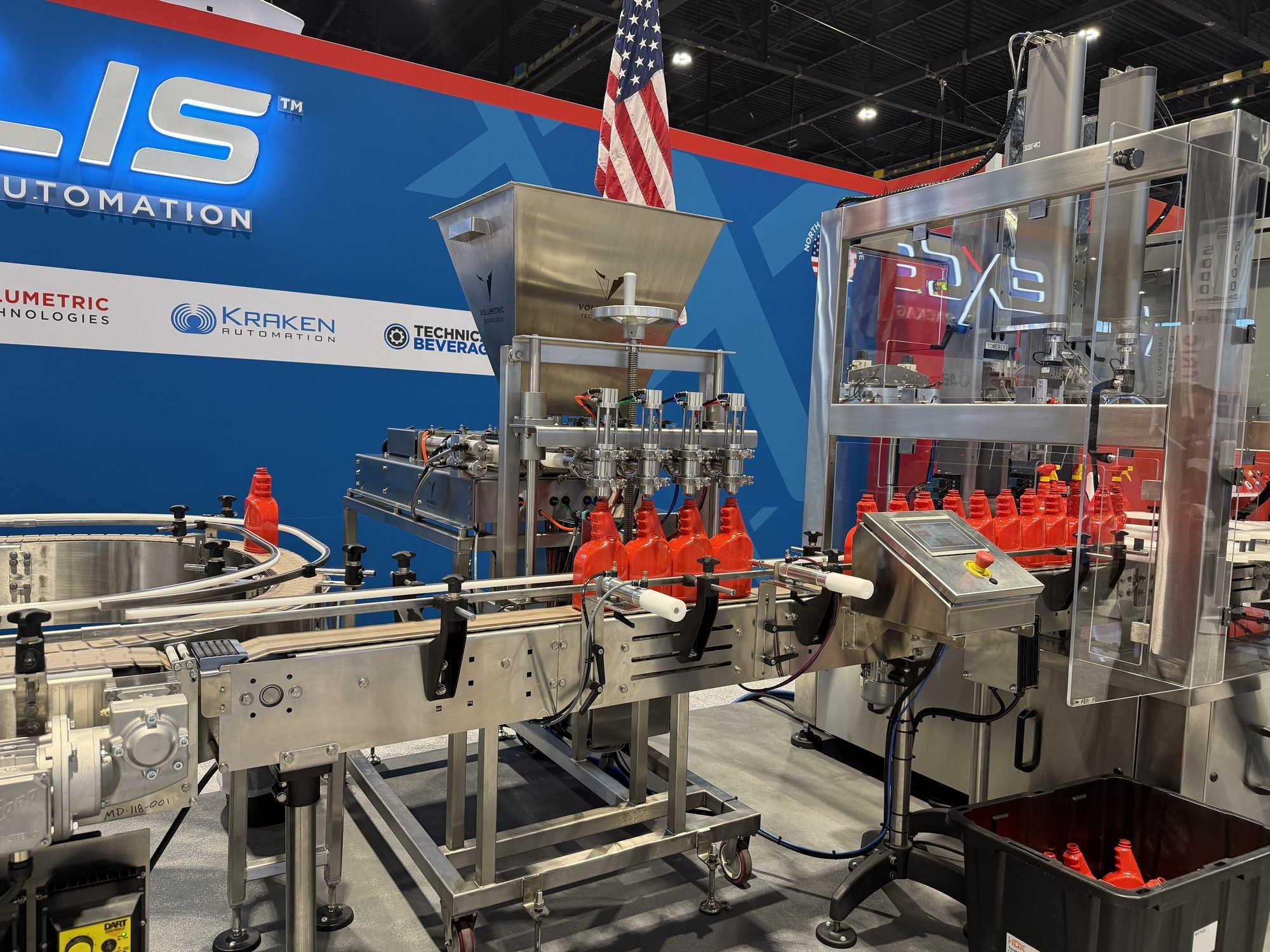
Filling from Volumetric Technologies, inspection from Kraken Automation and capping from SureKap, working together on one line.
Improving a packaging line is easier when you do not have to coordinate multiple equipment suppliers on your own. Excelis can help bring filling or depositing, capping, labeling, and automation together through one partner. That includes filling and depositing equipment from Volumetric Technologies, capping machines from SureKap, labeling and padding systems from AB Technology, and automation from Kraken Automation. That means a more coordinated approach to equipment selection, integration, and overall line performance.
Instead of looking at each machine as a separate purchase, our team can help evaluate how the pieces work together as part of the complete production process. For beverage operations, Technical Beverage Services supplies parts that keep existing equipment running.
Look at the Entire Line
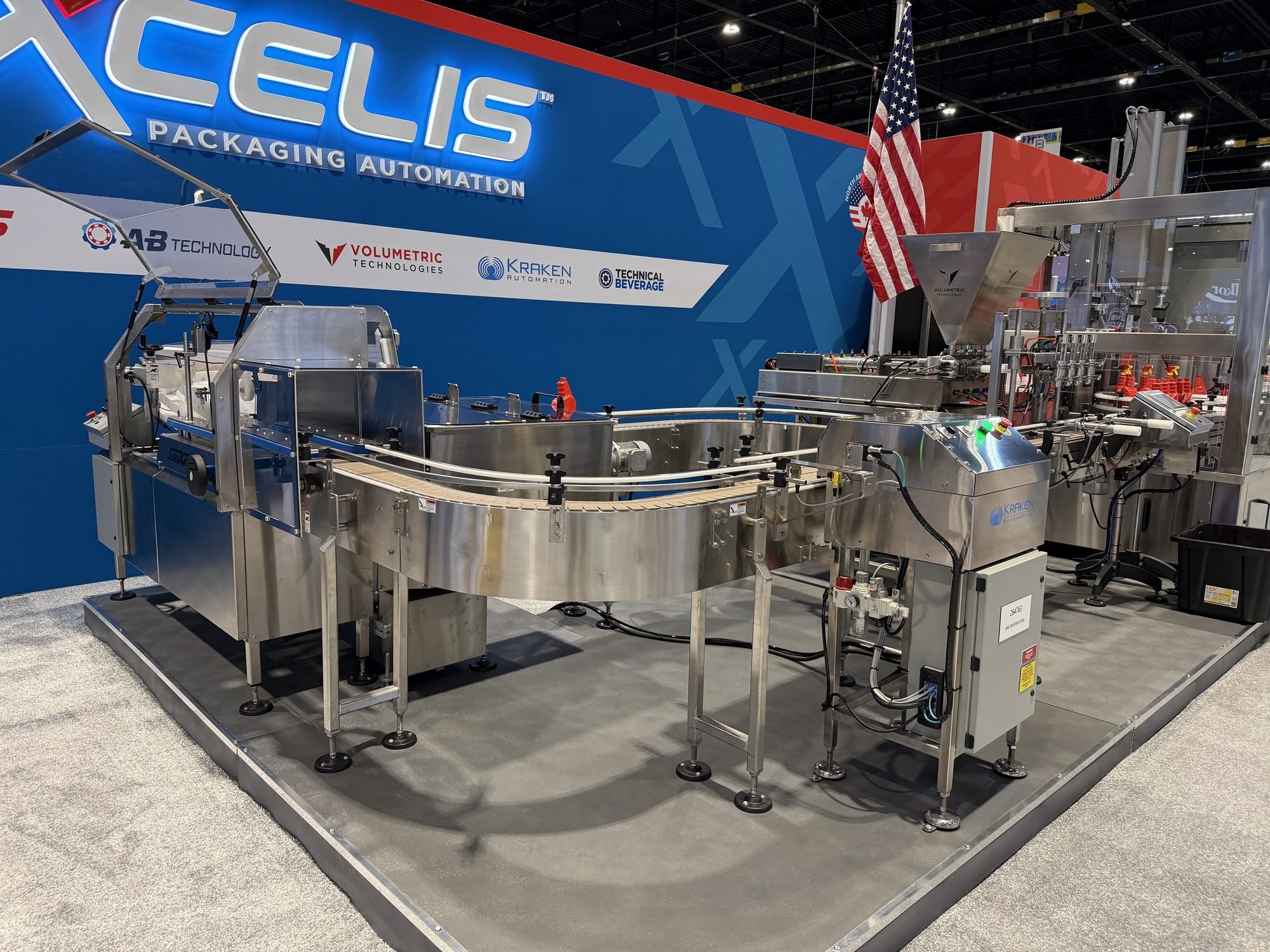
Each step is sized to keep pace with the next, so the line runs as one system.
A packaging line performs as a system, not as a collection of individual machines. A faster filler will not provide much value if the next step cannot keep up. The same is true for capping, labeling, conveying, product handling, and end-of-line automation. Looking at the complete process makes it easier to identify where equipment can be better integrated and where automation can improve overall line flow.
Leave Room to Grow
Production needs change. New products are introduced, volumes increase, packaging formats evolve, and labor requirements shift. When planning an equipment upgrade, it is worth considering not only what the line needs today, but what it may need next.
At Excelis, we work with manufacturers to develop filling, depositing, capping, labeling, and automation solutions around the application and the goals of the operation — with one partner helping bring more of the line together.
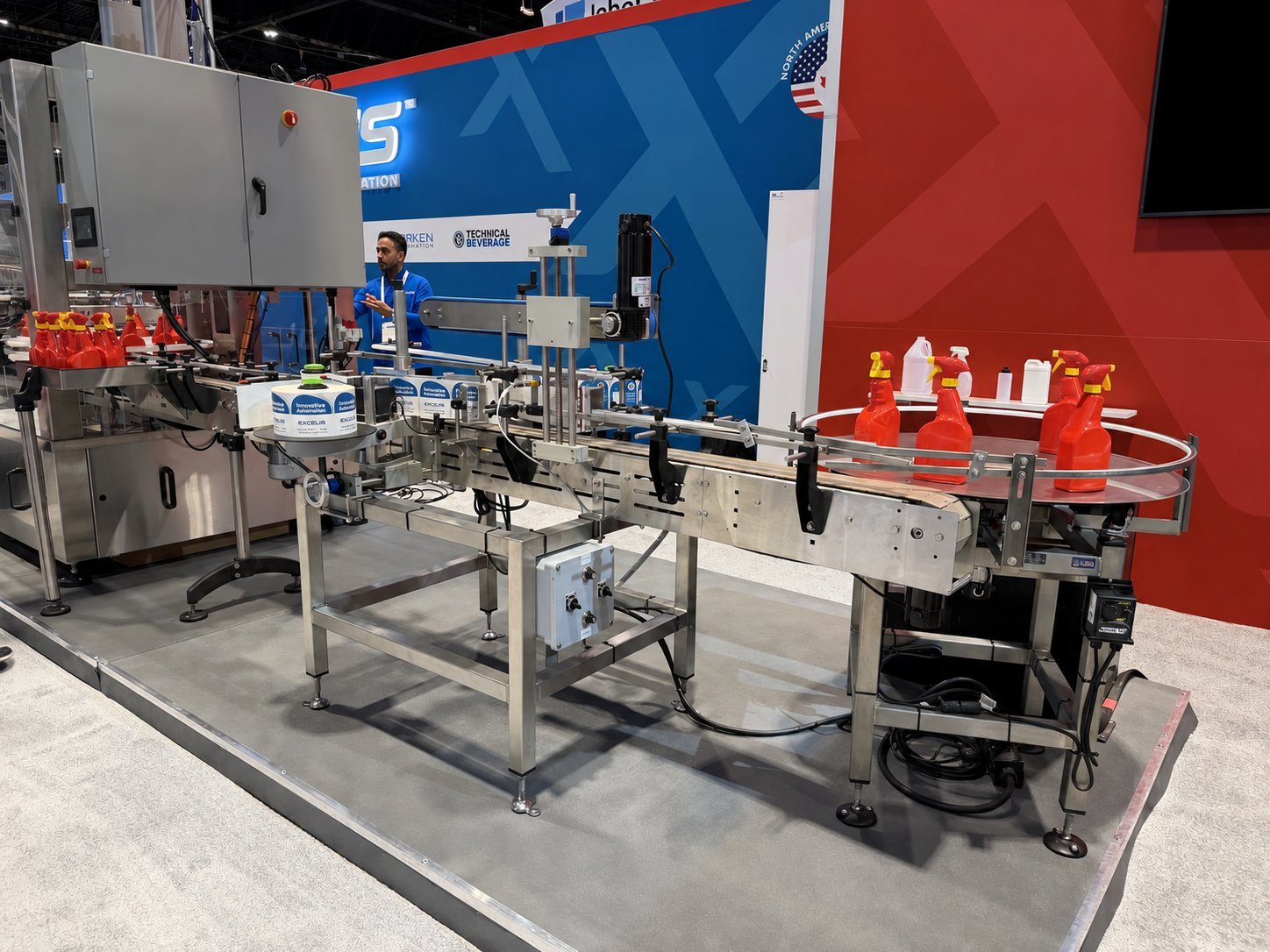
AB Technology’s in-line labeler finishing the run at PACK EXPO 2026.
This fall, take a closer look at your line. The right improvement today can create a stronger foundation for the production demands ahead.